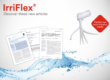

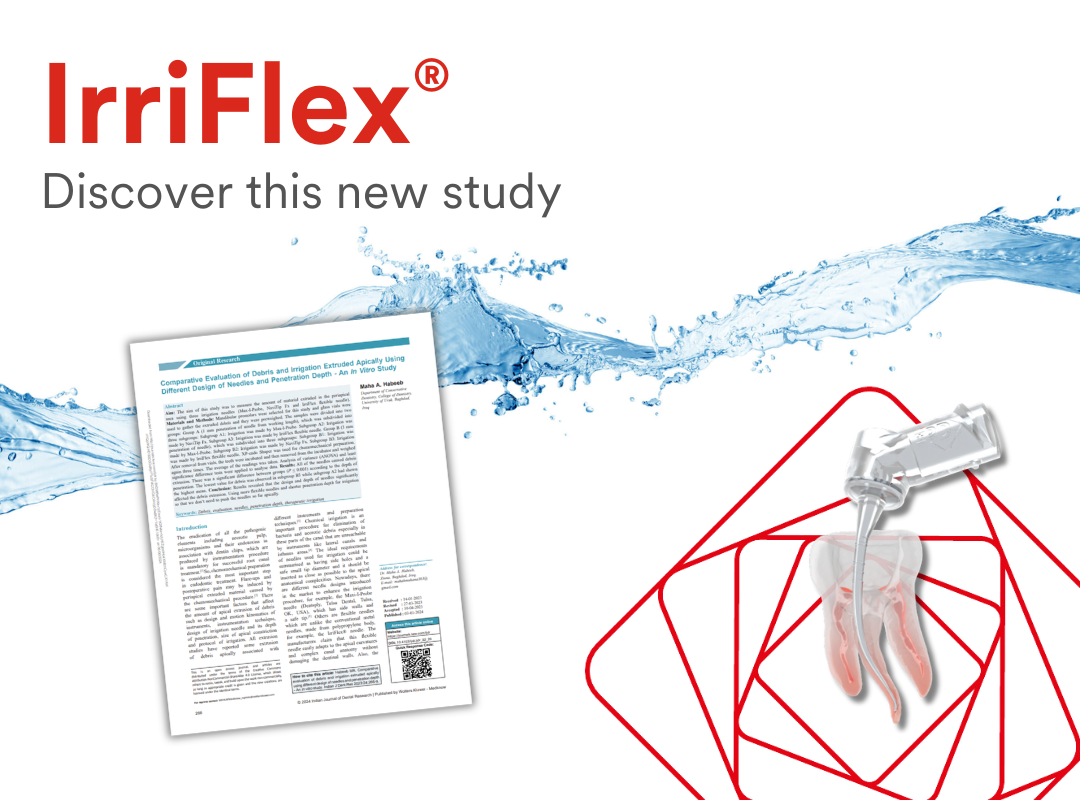
Comparative Evaluation of Debris and Irrigation Extruded Apically Using Different Design of Needles and Penetration Depth – An In Vitro Study
Maha A. Habeeb
Department of Conservative Dentistry, College of Dentistry, University of Uruk, Baghdad, Iraq
Abstracts
CASE SUMMARY
The aim of this study is to measure the amount of debris extruded into the periapical area during root canal irrigation with three types of needles: Max-I-Probe, NaviTip Fx, and IrriFlex.
The lowest amount of debris was observed with IrriFlex (and a penetration depth of 3 mm), while the highest amount was found with NaviTip Fx (and a penetration depth of 1 mm).
In conclusion, the study shows that needle design and penetration depth significantly influence debris extrusion. The use of more flexible needles and less apical penetration would be recommended to limit extrusion.
The lowest amount of debris was observed with IrriFlex (and a penetration depth of 3 mm), while the highest amount was found with NaviTip Fx (and a penetration depth of 1 mm).
In conclusion, the study shows that needle design and penetration depth significantly influence debris extrusion. The use of more flexible needles and less apical penetration would be recommended to limit extrusion.
DOI: 10.4103/ijdr.ijdr_32_23