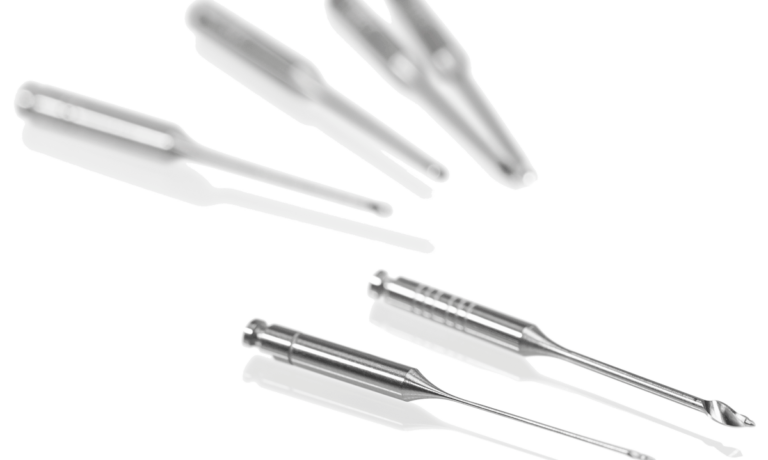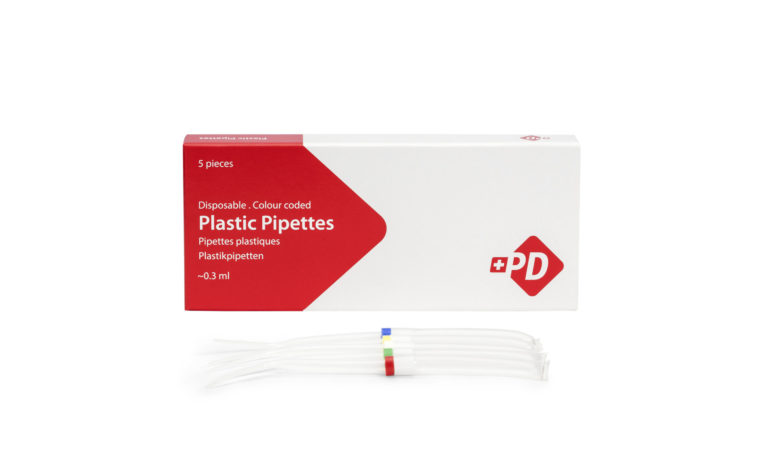


The access cavity is the gateway to the root canal system. Its design determines how well the canals can be cleaned, shaped, and filled — and how much structural integrity the tooth retains afterwards.
Why access cavity design matters ?
The main objectives of obturation are:
- Provides straight-line or near-straight-line access to all canal orifices
- Enables effective irrigant delivery to the entire canal length
- Preserves pericervical dentin — the most biomechanically critical tooth structure
- A poorly designed cavity compromises all subsequent steps
Access Cavity Design Options
Four approaches exist, each with distinct trade-offs:
- Traditional Access Cavity (TradAC) — Preserves all sound dentin; needs CBCT and good magnification to execute safely
- Conservative Access Cavity (ConsAC) — Best overall balance of structural preservation and procedural reliability [1, 11]
- Ultraconservative („Ninja“) Cavity — Maximum tissue preservation but significantly impairs canal detection and irrigation efficacy [2, 3]
- Caries-Driven Cavity — Orients the access through existing caries — no healthy dentin sacrificed [4]
Evidence Summary
- Conservative (not ultraconservative) access offers the best balance of structural preservation and procedural safety [1].
- Ultraconservative cavities can impair canal detection and chemomechanical debridement [3].
- CBCT-guided access reduces angulation error from ~15° (freehand) to ~6° [4].
- Pericervical dentin preservation is the single most important structural goal [4].
| Product | Clinical Role | Key Feature |
|---|---|---|
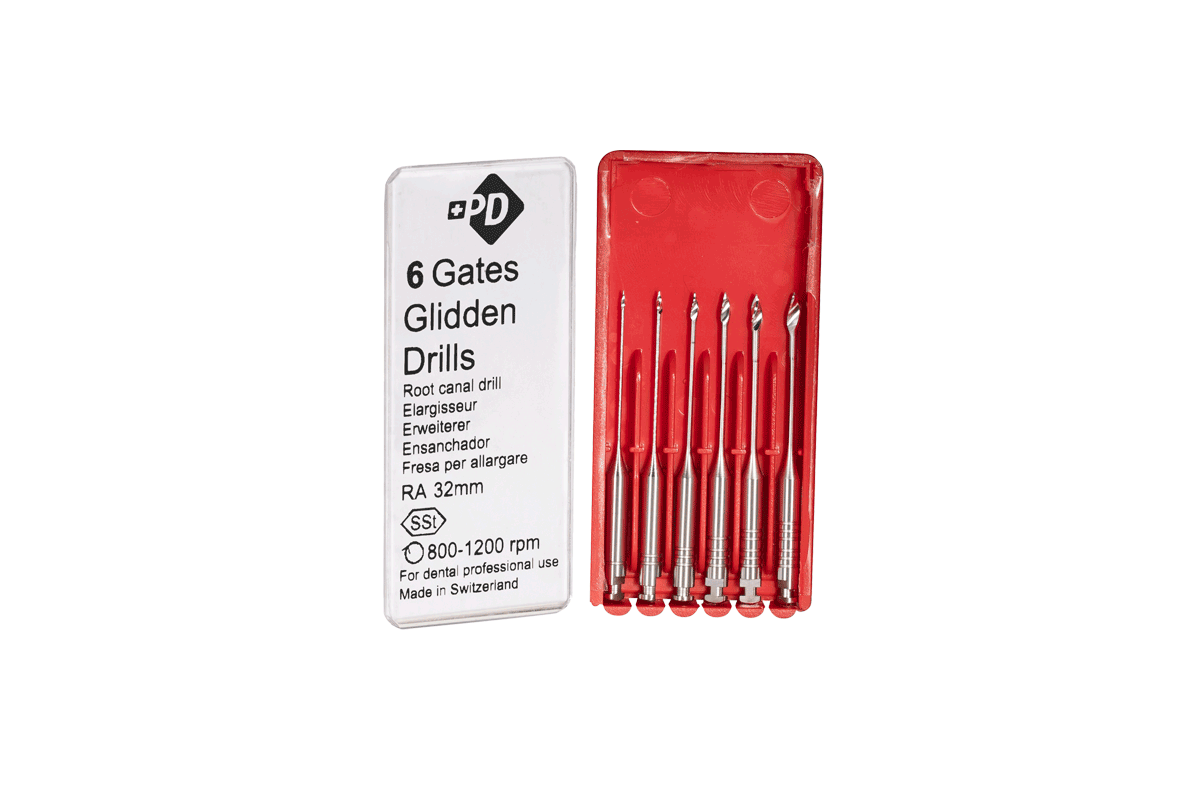
| Gates-Glidden Drills | Coronal flaring; straight-line access preparation | Flame-head, non-cutting tip, stainless steel, #1–6 |
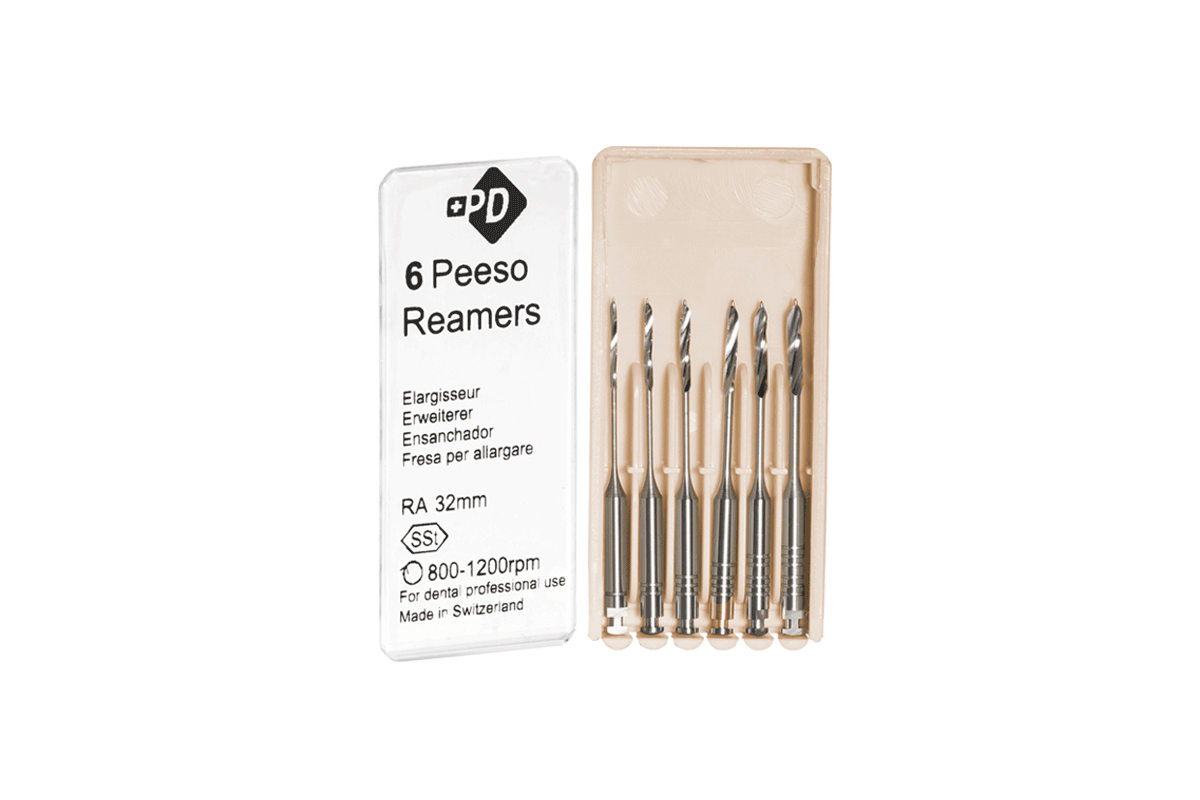
| Peeso Reamers | Post-space preparation; Gutta-Percha removal | Parallel cutting, non-cutting tip, depth ring compatible, #1–6n |
Key Instruments Used in Access Cavity Preparation
Gates-Glidden Drills: PD Dental Gates-Glidden Drills
Gates-Glidden (GG) drills are used for coronal canal flaring — widening the upper canal third to provide straight-line access and reduce stress on NiTi files.
- Flame-shaped head with a safety non-cutting tip — prevents lateral perforation
- Sizes #1–#6; used crown-down (large to small) for maximum efficiency
- Restrict sizes >3 in curved or narrow anatomy — strip perforation risk increases significantly [6]
- Swiss-quality stainless steel; standardized shank fits all rotary handpieces
Peeso Reamers: PD Dental Peeso Reamers
Peeso reamers have a longer, parallel cutting surface suited to post-space preparation and gutta-percha removal during retreatment.
- Non-cutting tip design prevents apical transport
- Silicone depth rings available for controlled drilling depth
- Match reamer size to canal diameter radiographically to minimize dentin removal [7]
- Post-space preparation with any rotary instrument can induce root dentin defects — always preserve ≥5 mm of apical gutta-percha [8]
Publications
Explore different publications about access cavities to know more about this topic.
[1] Abdellatif D, et al. Access cavity in endodontics: Balancing precision, preservation, and clinical needs. Journal of Conservative Dentistry and Endodontics. 2025. https://pmc.ncbi.nlm.nih.gov/articles/PMC12178559/
[2] Dioguardi M, et al. Minimally Invasive Access Cavities: A Benefit/Risk Analysis. Journal of Clinical Medicine. 2025. https://www.mdpi.com/2077-0383/14/7/2476
[3] Chan MYC, et al. A Literature Review of Minimally Invasive Endodontic Access Cavities. European Endodontic Journal. 2022. https://pmc.ncbi.nlm.nih.gov/articles/PMC9035856/
[4] Guided Access Cavity Preparation — Systematic Review Clinical, Cosmetic and Investigational Dentistry. 2024. https://www.tandfonline.com/doi/full/10.2147/CCIDE.S491632.
[5] Elmatary A, et al. Endodontic access cavity preparation: challenges and recent advancements. British Dental Journal. 2025. https://pubmed.ncbi.nlm.nih.gov/40217029/
[6] Abou-Rass M, et al. The impact of Gates-Glidden drills on residual dentin thickness in distal roots of mandibular molars. Journal of the American Dental Association. 2004. https://pubmed.ncbi.nlm.nih.gov/15354901/
[7] Farid F, et al. Selecting drill size for post space preparation based on final endodontic radiographs. Technology and Health Care. 2024. https://pubmed.ncbi.nlm.nih.gov/38578907/
[8] De-Deus G, et al. Effect of post space preparation drills on root dentin defects. PMC / NCBI. 2020. https://pmc.ncbi.nlm.nih.gov/articles/PMC7691261/
[9] Selvaraj H, et al. Fracture resistance of endodontically treated teeth restored with fiber-reinforced composites — systematic review. BMC Oral Health. 2023. https://pubmed.ncbi.nlm.nih.gov/37574536/
[10] Altitinchi A, et al. Comparative effectiveness of fiber and metal posts — network meta-analysis. Journal of Prosthetic Dentistry. 2024. https://www.sciencedirect.com/science/article/abs/pii/S0022391323005693
[11] Abdellatif D, et al. Conservative endodontic access cavity techniques — systematic review and meta-analysis. Clinical Oral Investigations. 2021. https://pubmed.ncbi.nlm.nih.gov/34623506/